RTO Upgrade Restores Performance for Engine Manufacturer
- Service: RTO Repairs, RTO Upgrade
- Industry: Automotive
- System: Concentrator, RTO
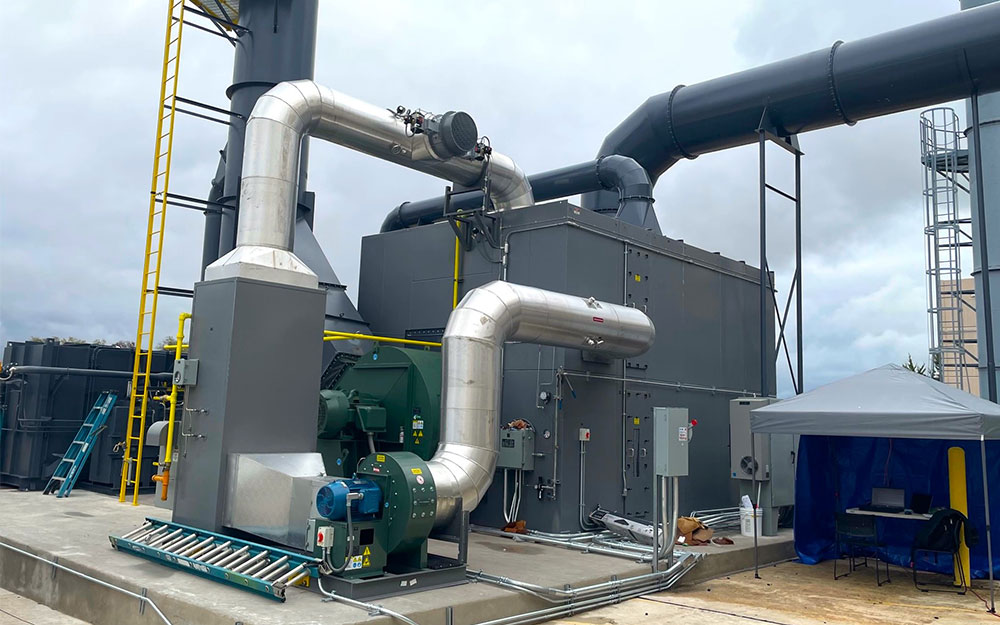
When a Fortune 100 engine manufacturing facility in the Southwest brought in PolSys for routine RTO and Zeolite Concentrator training, our field engineer uncovered critical system failures—including a plugged pressure transmitter and degraded components—that had gone unnoticed for months. This case study reveals how expert insight prevented costly downtime and restored regulatory compliance.
OPERATING ISSUE
When a large engine manufacturing facility in the Southwest called PolSys to train their team on the operation of their RTO and Zeolite Concentrator, they learned much more than they expected. During this on-site training, our Sr. Field Engineer discovered serious deficiencies in the system, including pressure transmitter plugging, Zeolite wheel degradation, mixing box damper disrepair, and baghouse filter frame structure deformation. Photos were taken to document the discoveries (see below).
These issues greatly reduce RTO and Concentrator performance. Unofficial emissions testing confirmed that RTO destruction efficiencies as specified in the facility’s air permit of 99% or more for organic compounds were not being met.
The plant’s maintenance and engineering teams were unclear about the origin of these performance issues in part because they had not been performing comprehensive inspections of the systems.
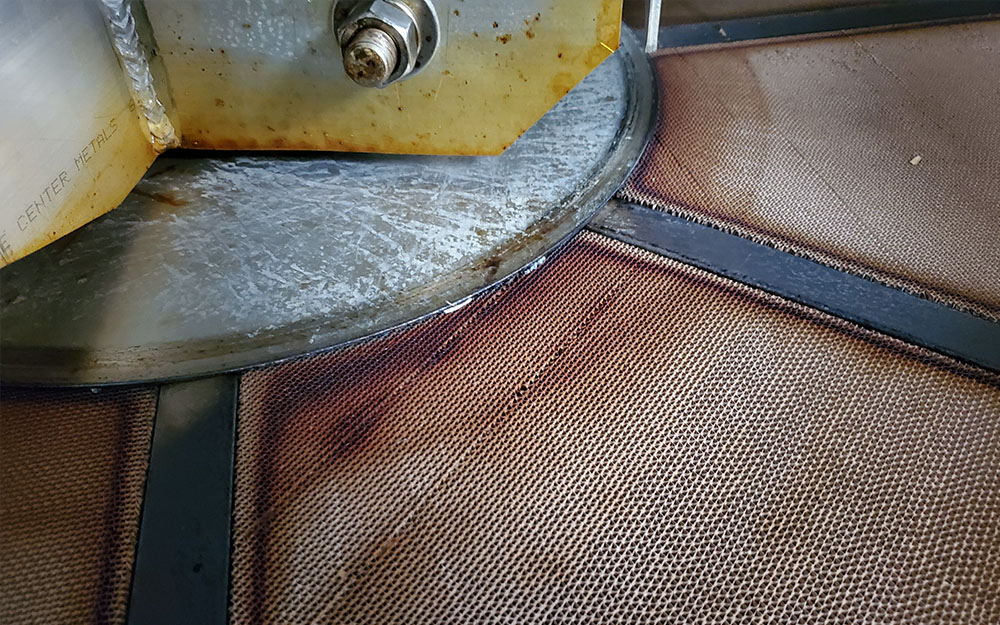
BEFORE: Zeolite Wheel surface coated with lacquer (yellow tint) from paint being drawn into the system
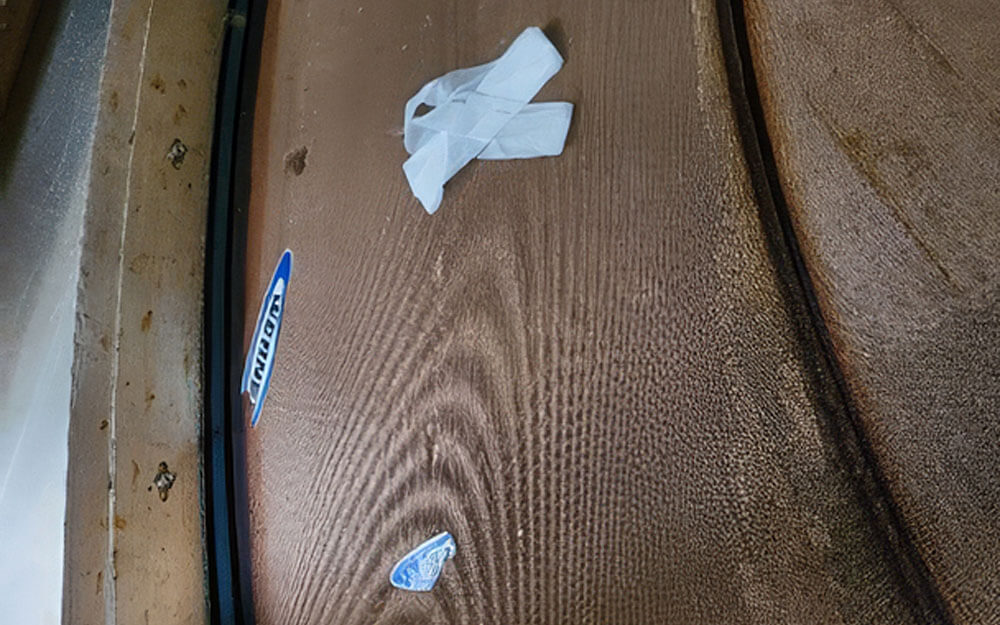
BEFORE: Debris inside the concentrator
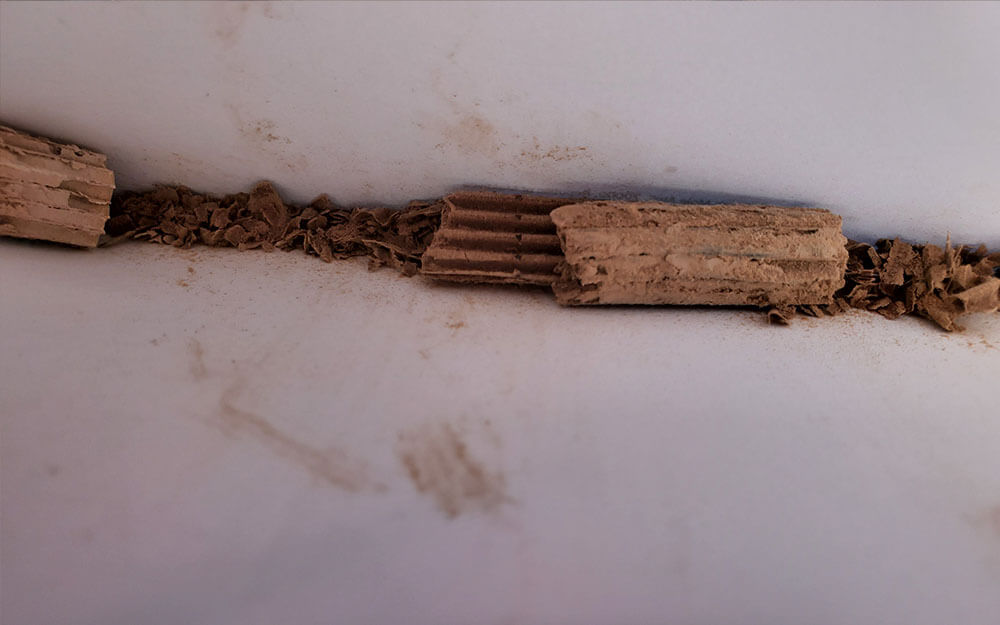
BEFORE: Disintegrated core sample from Concentrator Wheel
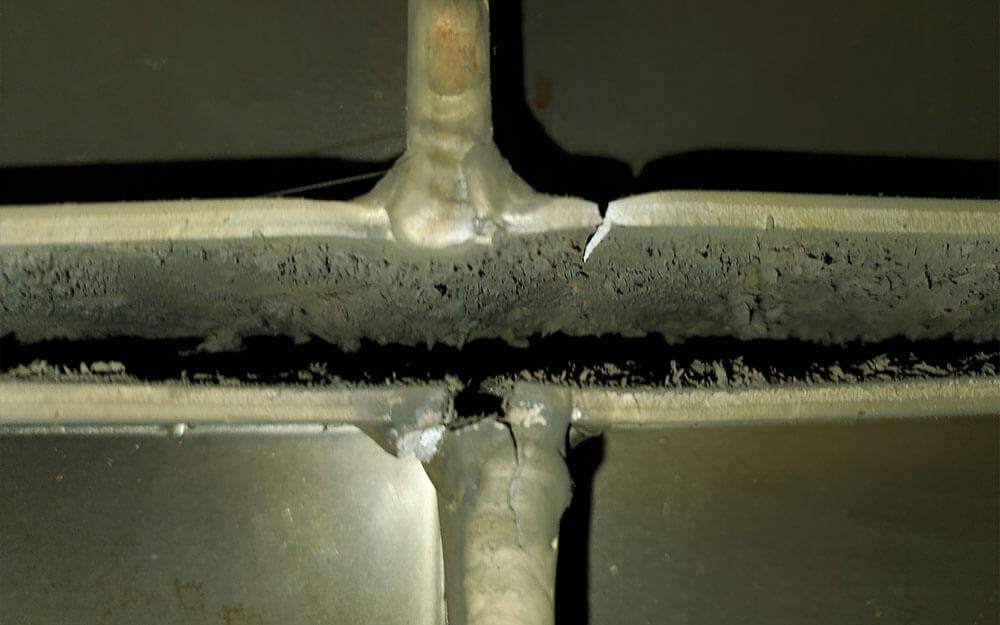
BEFORE: Cracked baghouse filter frame
PROJECT SOLUTION
Because of our experience, our team was able to determine the root cause and also why the performance issues had remained hidden for so many months. Our team traced much of the equipment degradation and poor performance to a plugged pressure transmitter. Specific issues included:
- The inlet pressure transmitter had been inappropriately mounted on the flat section of the bottom part of the duct.
- The ID tubing on the pressure transmitter was too narrow (1/8” instead of 1/2″)
- The U trap drain was positioned in a way that caused the line to plug, which in turn dampened the signal to the controller.
- Since the plugged transmitter was not reading accurate pressure at the inlet, the fan continued to increase in speed, topping out at a maximum of 60Hz. These unacceptably high fan speeds led to the high negative pressure exceeding 1 psi, too much for the aluminum walls of the Zeolite Concentrator to accommodate. This also allowed for the introduction of damaging aerosols, condensibles, and overspray from the paint booth into the concentrator, clogging the bags and dead-heading the fan. (Overspray issues at the inlet plenum further verified the fan had been pulling too hard from their process and contaminating the wheel.)
The facility had been inappropriately compensating for reduced concentrator and RTO performance by shortening poppet valve switchover timing. This controls-based short-term “fix” masked the underlying cause while further eroding equipment performance and system life.
First, our team ensured the pressure transmitter and U trap drain were repositioned correctly and the ID tubing was resized. This addressed the underlying failure mode. However, due to the damage previously incurred, the Zeolite Wheel and mixing box dampers needed to be replaced and the baghouse damage required repair.
These system repairs needed to be performed as soon as possible, however the expedited lead times for a new wheel and dampers were weeks away. What’s more, the plant was operating at full capacity and could not afford precious downtime until their next planned shutdown over the Christmas break.
Our quick-thinking field engineers recommended a temporary solution. As no rental oxidizer was available that was large enough to accommodate the 20,000 scfm off-gas vapor stream, we vented the process vapors four ways – some directly to the RTO, and the remainder to a trio of rental oxidizers. The rentals had to be field-modified with customized components (e.g., cabling, flex hoses, steel-reinforced gas line, etc.) to tie into the process in the field. As part of this implementation, we also provided full production workday operator coverage (18 hr/day) for the rental oxidizer units for the project duration.
Upon delivery of the wheel and dampers, our team worked around the clock to complete the baghouse damage repairs, install the new wheel and mixing box dampers, and reset the RTO over a planned holiday shutdown consisting of just a few days.
After all repairs were completed, we rebalanced and reset the RTO System to the original factory settings and ensured proper poppet valve switchover timing.
CUSTOMER BENEFIT
The speed of the repair, along with our temporary rental oxidizer solution, is estimated to have saved the customer hundreds of thousands of dollars or more in lost production and potential fines. Subsequent system inspection and performance testing confirmed that the newly repaired and rebalanced RTO and Concentrator were performing effectively, and that destruction efficiencies as specified in the facility’s air permit were being met or exceeded.
The customer was thrilled with our creative and strategic problem-solving, completion of a highly complex service in a tight timeframe, and overall meticulous project performance. They were so impressed with our capabilities that one day after project completion they signed an annual Service Agreement with us.
Related Case Study
Poppet Valve Project Solves RTO Reliability Issues
A large, industrial wastewater treatment facility with around-the-clock operations needed a solution to improve the on-stream reliability of two Regenerative Thermal Oxidizers (RTOs). Their systems were often shutting down multiple times a week – causing major operating and environmental compliance issues.
- Service: Poppet Valve RepairsRTO Repairs
- Industry: Wastewater
- System: RTO