Control System Upgrade Ends RTO Shutdowns for Chemical Plant
- Service: Control System Upgrade
- Industry: Chemical Manufacturing
- System: Industrial Controls, RTO
A major chemical manufacturer operating 24/7 faced frequent shutdowns due to a failing legacy control system on their Regenerative Thermal Oxidizer (RTO). These disruptions led to costly permit violations and production losses. To address these critical issues, we delivered a fast, customized control system upgrade that significantly improved reliability, compliance, and overall operational efficiency.
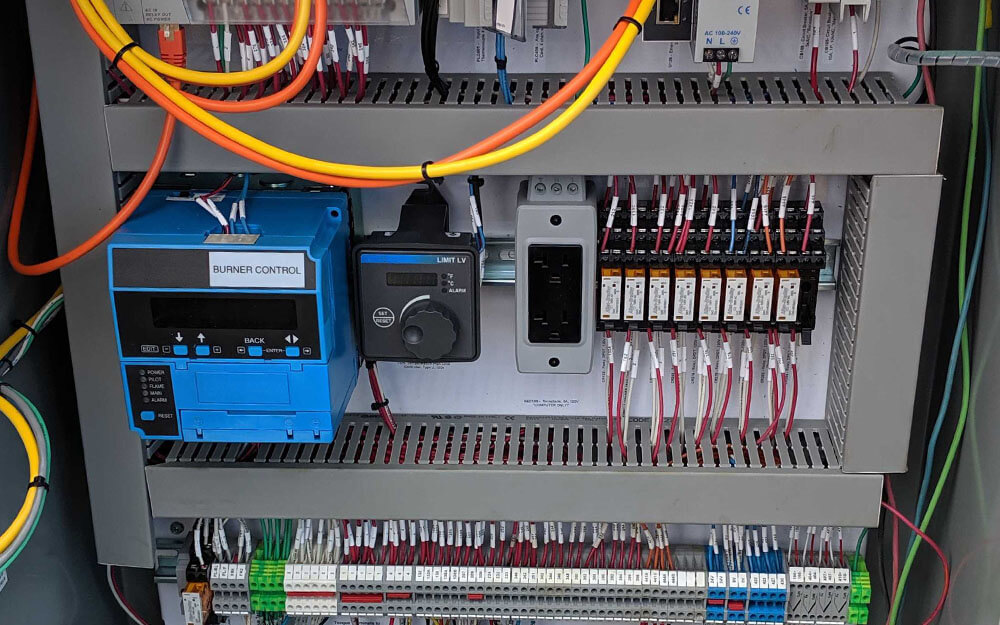
OPERATING ISSUE
A large chemical manufacturing company with 24/7 operations was experiencing 2-3 shutdowns per month due to the legacy control system of their Regenerative Thermal Oxidizer (RTO). This downtime was unacceptable, as it dramatically decreased productivity, increased operating costs, and caused the company to violate its air permit. (The company’s batch process features a fermenter with effluent gases that require treatment with an RTO. If the thermal oxidizer is offline, the plant has no choice but to exhaust the untreated air before pressure builds in the fermenters – resulting in tens of thousands of dollars in fines and lost production.)
To compound the situation, poor alarm notification and annunciation slowed troubleshooting, and outdated PLC logic failed to properly alternate redundant fans. Because the thermal oxidizer’s control system was built on a popular platform that is no longer sold or supported by the manufacturer, an upgrade was inevitable.
The customer called PolSys Services to increase the reliability of their thermal oxidizer by upgrading the controller to a newer, more robust platform with alarm notification and annunciation. The plant’s intolerance for downtime meant on-site installation had to be both quick and accurate.
PROJECT SOLUTION
In addition to operating their oxidizer reliably and efficiently, the customer requested that the new control system maintain communications with the plant distributed control system (DCS), interface with a remote annunciator panel, and collect a variety of data to help improve overall plant efficiency. We custom-engineered a solution with this advanced functionality. We installed a new HMI with the ability to send email notifications on alarms and to send emails with system data at a time interval based on an event. We also added ethernet interface cards to their existing VFDs that allowed for the collection of data such as the amount of torque used by the motors, their speed, and the amount of current drawn.
We accomplished most tasks prior to being on-site for final installation. For example, we saved hours of troubleshooting in the field by using PLC simulation software to test our logic in a virtual environment in real-time, before being on-site. Everything was installed, tested, and running in less than three days.
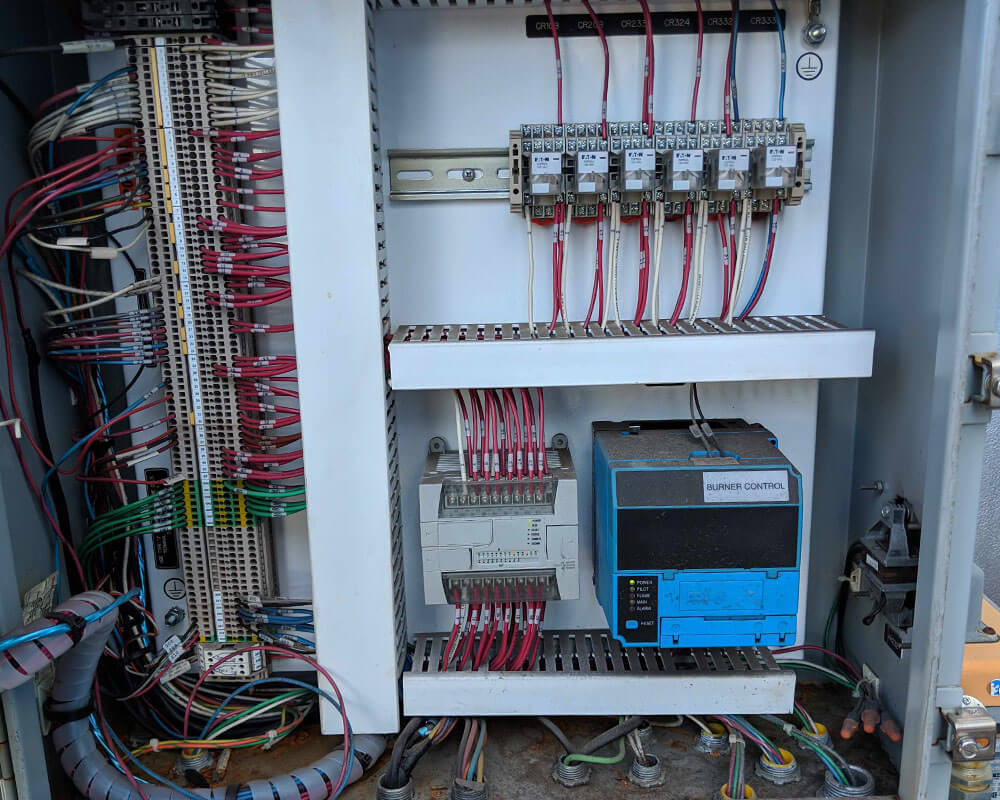
Control Panel BEFORE UPGRADE
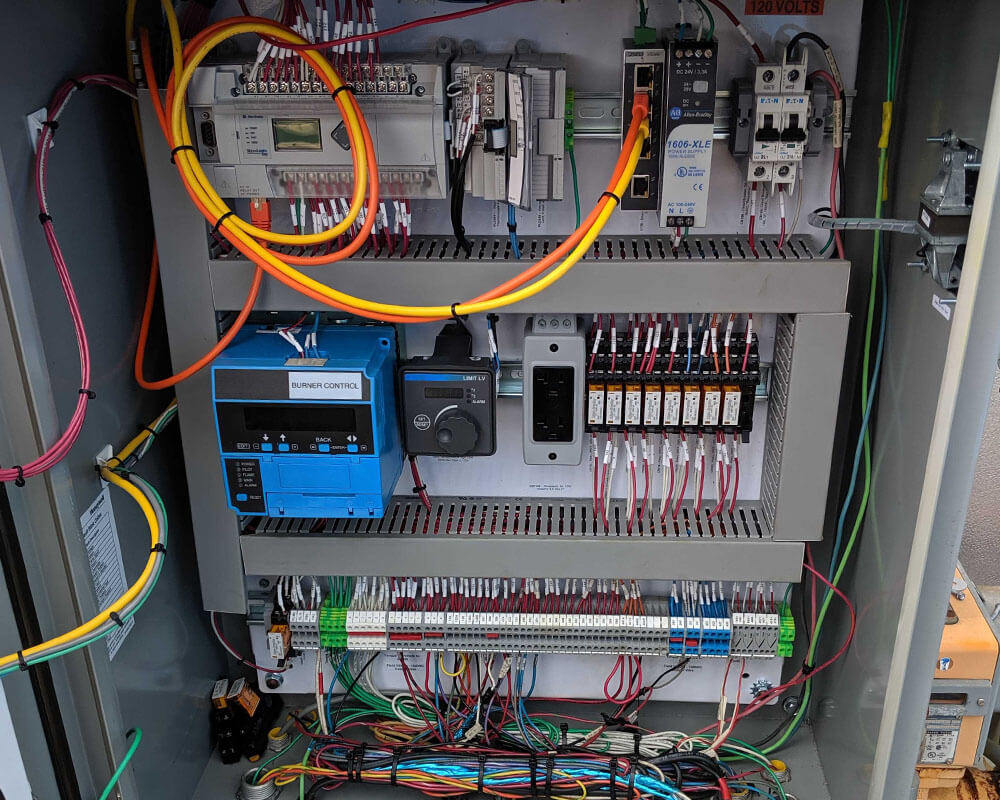
Control Panel AFTER UPGRADE
CUSTOMER BENEFIT
Since the installation of the new control system, the only unplanned shutdowns have been related to component failures in the field. In these cases, the plant reported that due to the detailed alarm messages, they were able to quickly identify and replace the faulty component and return the system online without affecting production and before incurring any air permit fines. Operators have also commented on how much easier it is to bring the system online and shut it down between production runs. This system upgrade is estimated to more than pay for itself in improved production uptime and air permit compliance within one year.
Related Case Study
RTO Control System Upgrades for Fortune 100 Auto Manufacturer
A global Fortune 100 automotive manufacturer faced major operational challenges due to outdated PLC and HMI hardware in their 4 Regenerative Thermal Oxidizers (RTOs). These legacy systems not only risked future manufacturer support but also contributed to unplanned downtime and inefficiencies. Read how our turnkey control system upgrade delivered robust, reliable performance—minimizing downtime, improving responsiveness, and streamlining operations.
- Service: Control System Upgrade
- Industry: Automotive
- System: Industrial ControlsRTO