Expert Thermal Oxidizer Inspections, Troubleshooting & Repair in Dallas-Fort Worth
When your thermal oxidizer or regenerative thermal oxidizer (RTO) fails, production downtime and emissions compliance risks can escalate rapidly. Fast and accurate troubleshooting is critical.
Our headquarters is located just north of Houston, so our Texas-based technicians can mobilize quickly to provide on-site oxidizer inspections, repair, troubleshooting, and maintenance for facilities throughout the Dallas–Fort Worth metroplex. In fact, we have often been told that we provide the fastest response times and most competitive rates compared to other national oxidizer service companies.
We service all major types of systems throughout North Texas, including:
- Regenerative Thermal Oxidizers (RTOs)
- Direct-Fired Thermal Oxidizers
- Recuperative Thermal Oxidizers
- Catalytic Oxidizers
- RTO + Concentrator systems
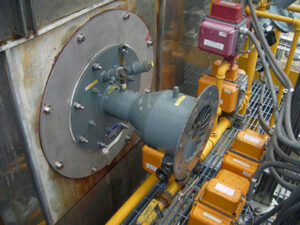
- Burners / Gas Trains
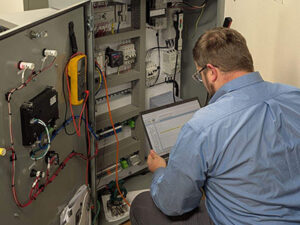
- Control Systems
Our technicians work on all makes and models of oxidizer equipment, providing unbiased recommendations and cost-effective repair solutions.
Why Dallas Facilities Choose Our Oxidizer Services
- Fast Response from Texas-Based Technicians
Our technicians are locally based and regularly service North Texas facilities, allowing for much faster response times than other national service providers.
- Specialized Expertise on Systems in Harsh, Humid Environments
From manufacturing and refining to aerospace and power generation, our field team understands the challenges of Dallas’s extreme heat and sudden weather swings. With local knowledge, fast response, and technical expertise, PolSys is North Texas’s trusted partner for industrial service and support.
- Independent, Unbiased Recommendations
We service oxidizers from any manufacturer. Because we aren’t an OEM Aftermarket service division, our recommendations truly focus on long-term reliability and cost-effective solutions. We service all makes and models of thermal oxidizers, RTOs, Concentrators, and other forms of emissions systems from companies including Air Clear, Anguil Environmental, Catalytic Products (CPI), CECO, CMM, Durr, Epcon, Munters, Pollution Systems, Ship & Shore Environmental, TANN, and Zeeco.
- Complete Emissions System Expertise
We support your entire emissions system, including your burners and gas trains, fans, ductwork, and control system.
- Site-Specific Service Agreements
We are the only provider in the Dallas area to offer Rapid Response Service Agreements, designed around your facility’s compliance needs, downtime tolerance, and other key factors.
Dallas-Fort Worth Thermal Oxidizer & Burner Service Area Coverage
Our technicians support systems at facilities throughout North Texas, including:
- Arlington
- Carrollton
- Dallas
- Denton
- Fort Worth
- Frisco
- Garland
- Grand Prairie
- Irving
- McKinney
- Mesquite
- Plano
- Richardson
We also support facilities across the broader North Texas manufacturing corridor.
Regenerative Thermal Oxidizer (RTO) Services – Dallas
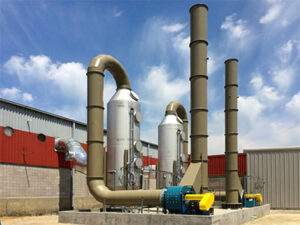
While we service all types of air pollution control systems, RTOs are our specialty. These oxidizers are commonly used due to their high thermal efficiencies, but their many moving parts and associated hardware mean that timely inspections and maintenance are essential to ensure high reliability, cost-effective performance, and lowest cost of ownership. (Learn How an RTO works.) Our extensive service capabilities include:
RTO Troubleshooting, such as:
- Switching valve failures and valve timing problems
- Excessive pressure drop
- Media plugging or contamination
- Airflow imbalances
- RTO hot spots on shell
- Burner flame failure alarm
- Control system faults
RTO Repairs, such as:
- Ceramic media replacement
- Valve rebuilds and actuator repair
- Expansion joint replacement
- Refractory and insulation repairs
- Ductwork repairs
- RTO retrofits and upgrades
RTO Controls & Automation
- PLC troubleshooting
- VFD failures
- Burner management systems
- Safety interlock testing
Thermal Oxidizer Troubleshooting – Dallas
Many oxidizer issues develop gradually before causing a full shutdown. Our field technicians combine mechanical, combustion, and control system expertise to diagnose complex oxidizer problems.
Common warning signs include:
- Increasing fuel consumption
- Higher pressure drop across the system
- Combustion instability
- Frequent shutdown alarms
Common root causes include:
- Fouled ceramic media
- Improper burner tuning
- Faulty temperature instrumentation
- Control system errors (often programming errors made to improperly but temporarily “fix” another issue)
Industries We Serve in the Dallas–Fort Worth Area
The Dallas metroplex has a diverse industrial base requiring reliable emissions control systems. We frequently support:
- Aerospace manufacturing
- Electronics manufacturing
- Plastics and composites production
- Food and beverage processing
- Metal fabrication
- Automotive manufacturing
- Chemical processing
Frequently Asked Questions
- How quickly can you respond to oxidizer issues in Dallas?
Because our technicians are based in Texas and regularly travel to North Texas facilities, we can typically respond within 24 hours for most service calls.
- Can you service oxidizers from other manufacturers?
Yes. Our technicians work on all makes and models of thermal oxidizers and RTO (Regenerative Thermal Oxidizer) systems.
- What are the most common RTO failures?
Typical failures include switching valve (poppet valve) malfunctions, ceramic media plugging or failure, burner malfunction, insulation or refractory damage, cold-face support failure, and control system faults. Ceramic media plugging from particulates or silicones is one of the most common operational issues our field team encounters.
- How often should a regenerative thermal oxidizer be inspected?
We recommend a comprehensive (internal & external) inspection at least once a year for RTOs, plus an additional semi-annual external inspection in some cases. We also recommend that burner flames & temperatures are checked daily, sensors and valves be checked at least monthly, and ceramic media and fan operation is checked quarterly.
- How long does RTO ceramic media last? How do you clean or replace it?
Media lifespan varies greatly and depends on many factors. It can last 10-20 years, or just a few depending on contamination. Cleaning methods include vacuuming, washing, compressed air, or bake-outs. A turnkey media replacement may eventually be required.
- Do you offer maintenance service agreements in Dallas?
Yes. Our maintenance agreements include inspections, troubleshooting support, and emergency response options.