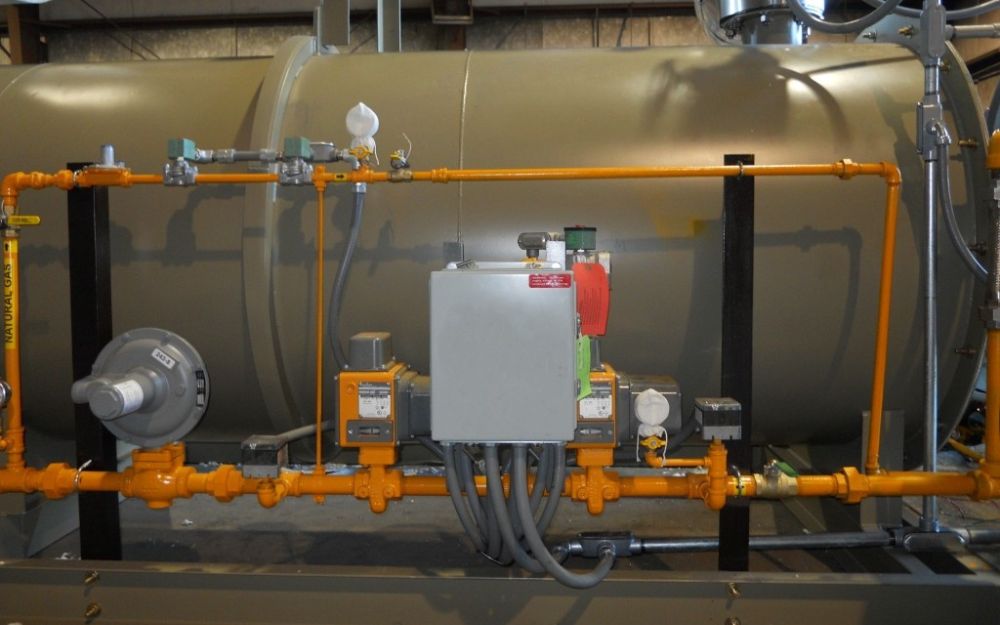
What is a Valve Safety Train?
A valve safety train regulates fuel flow and pressure to safely deliver fuel to burners consistent with process requirements. Valve safety trains usually transport natural gas, keeping the gas out of the combustion chamber when the system is offline or cycled and enacting an emergency shutdown if there’s an issue. As such, valve safety trains are critical not only to process control, but also to plant safety.
Although these fuel-delivery devices are employed daily in countless facilities around the globe, maintenance teams tasked with servicing them often lack sufficient training on their inspection and repair. Many staff simply misunderstand how they operate.
After all, a valve safety train is a complex combination of mechanical and electrical devices, including piping, valves, switches, regulators, sensors, and wires. Sediment traps, safety shut-off valves (SSOV), manual valves (MV), gas pressure switches, and other components must work correctly in concert with one another, which means a small issue with one part can cause a big problem. Even “basic” maintenance like tuning a burner or changing a control valve should be performed only by experienced technicians.
At a minimum, the inspection, cleaning, and maintenance of valve safety trains should occur on an annual basis. This is especially important as the system ages and experiences more wear and tear.
What to check for (partial list):
Below is a partial list of common concerns that should be addressed during an inspection:
- Debris in burners, fans and air piping, which can adversely impact air-to-fuel ratios and overall system energy efficiency
- Safety valves blocked due to condensate
- Damaged valves that close only partially
- Regulators, valves, and other devices that are improperly vented
- Worn valves (especially diaphragm valves) that might rupture
- Loose linkages
- Regulators and/or pressure switches that fail to respond correctly
- Correct operation of any ancillary devices (e.g., pilot lines, instrumentation, and flow meters) added for specific process control
- Any past action by a maintenance member that might have inadvertently bypassed a safety control
It’s also important to keep in mind that valve safety trains must be compliant with all applicable (and evolving) local and national codes, standards, and insurance requirements. Based on our many years of experience, annual testing and preventive maintenance are also often requirements of insurance agencies.
An in-depth knowledge of fuel-fired systems is key to safe operation and accident prevention. Facilities are strongly advised to have their valve safety trains inspected, repaired, and upgraded by experienced, field-trained technicians with in-depth knowledge of this type of equipment.
NOTE: Although educational in nature, this blog is not intended to offer comprehensive technical, safety, or legal advice.