Regenerative Thermal Oxidizer Heat Exchanger Upgrade
- Service: RTO Repairs, RTO Upgrade, Upgrades & Retrofits
- Industry: Manufacturing
- System: RTO
When critical heat exchanger failures on 2 Regenerative Thermal Oxidizers (RTOs) threatened EtO compliance and costly downtime, our team tackled a complex replacement project with severe site constraints, complicated logistics, and a compressed timeline. Discover how we engineered and executed a turnkey solution.
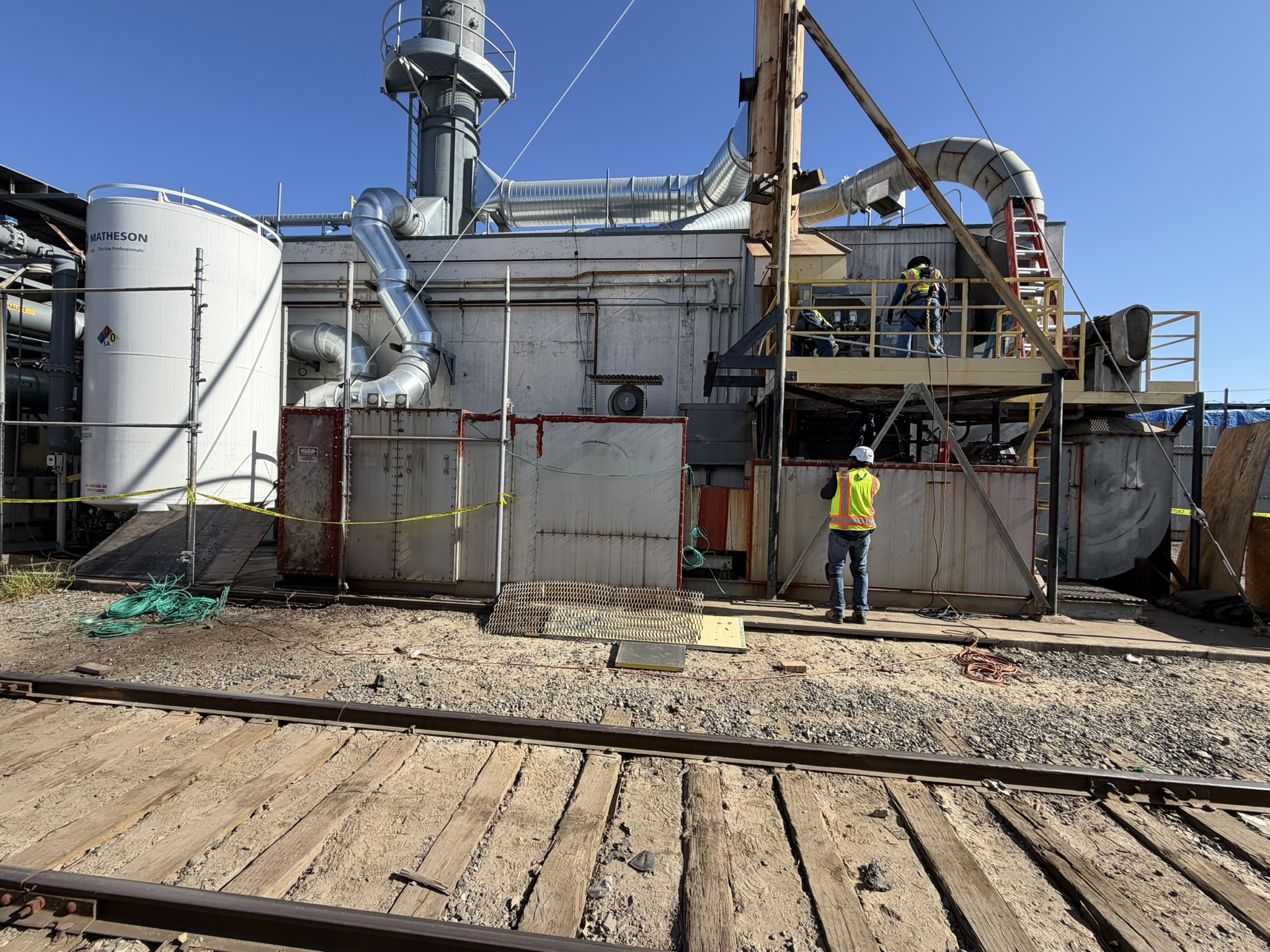
OPERATING ISSUE
A global industrial services provider on the West Coast urgently needed to address critical defects in the heat exchangers of two regenerative thermal oxidizers (RTOs). A recent leak test and thorough internal inspection revealed significant structural failures that jeopardized the facility’s ability to meet California’s new, highly stringent destruction requirements for Ethylene Oxide (EtO).
Due to the crucial nature of their environmental compliance and the severe risk of unplanned downtime, the facility required a rapid, full-scale replacement of both heat exchanger units to prevent regulatory penalties and ensure continuous, safe operation.
PROJECT SOLUTION
PolSys Services immediately deployed a technical team to evaluate the site constraints and engineer a comprehensive replacement plan. The site presented significant logistical challenges, including tight overhead clearances, severe space restrictions, complex plant safety guidelines, and proximity to active railroad tracks, which required specialized heavy-lifting permits and precise coordination.
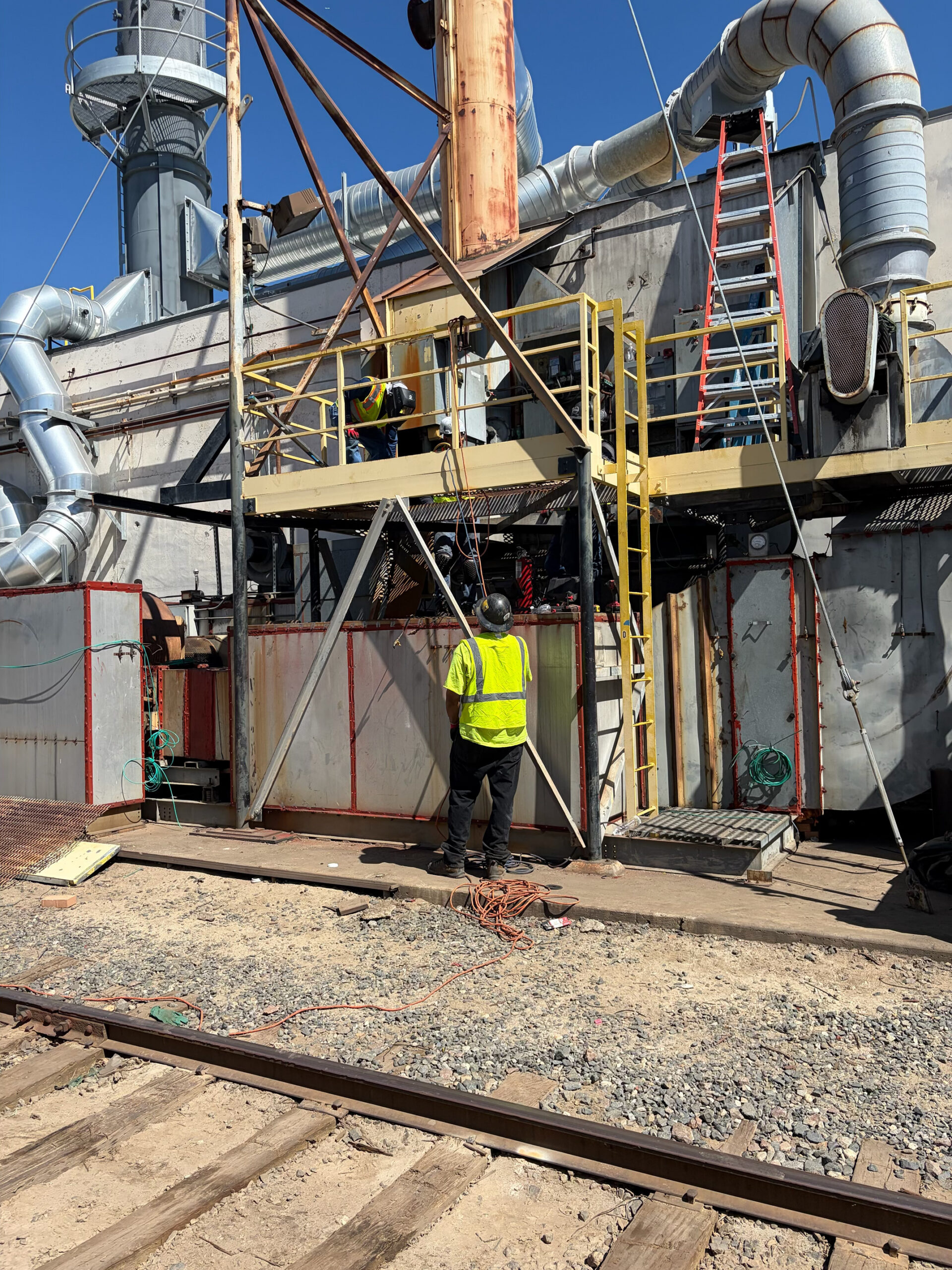
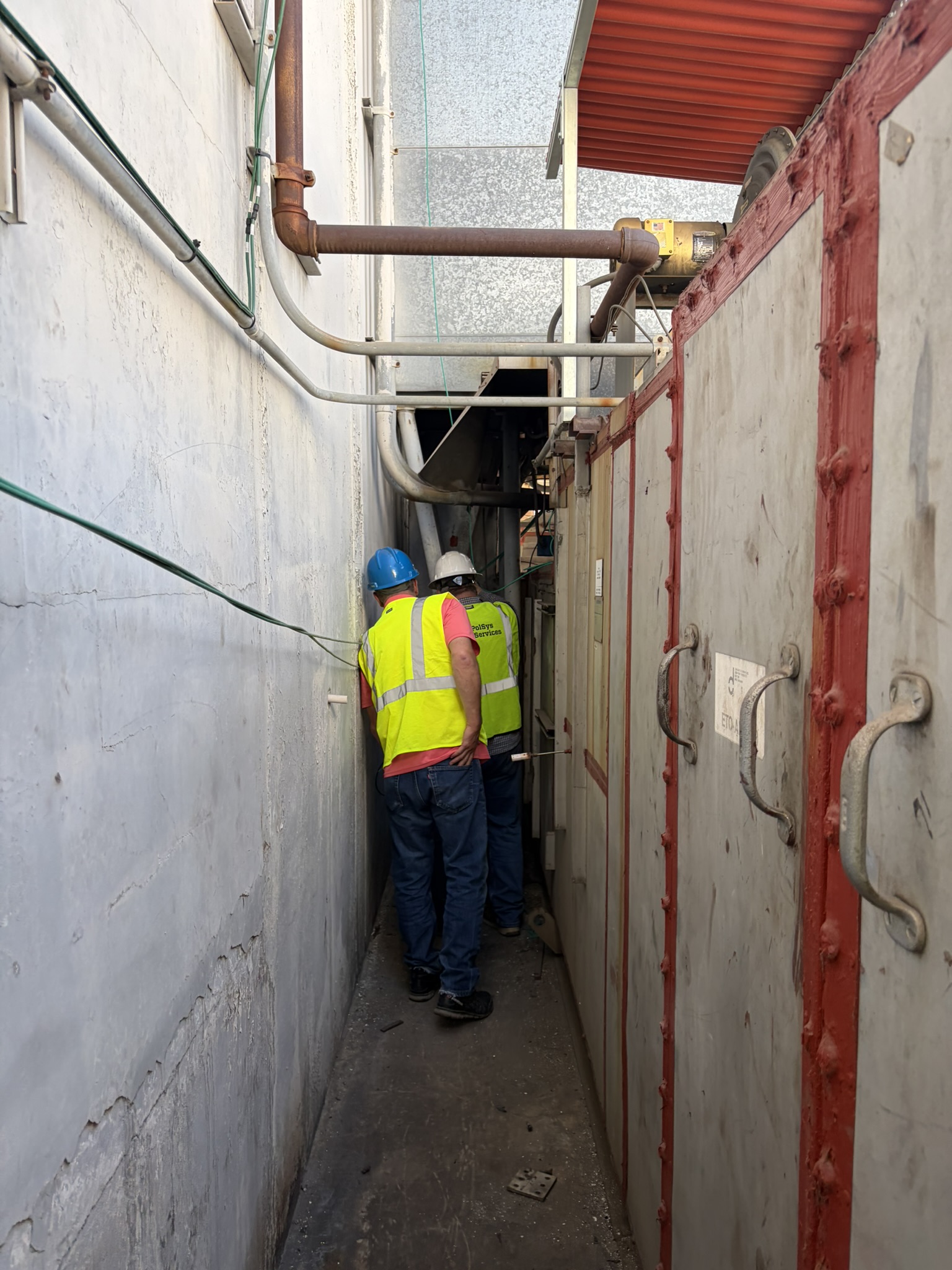
After dismantling the top cladding and insulation, the team separated the RTV-sealed ducting connections and extracted the defective heat exchanger modules using a high-capacity crane securely positioned near the railway tracks. Subsequently, the team safely installed two new, single-piece 13,000 lb. all-welded industrial plate-type air-to-air heat exchangers.
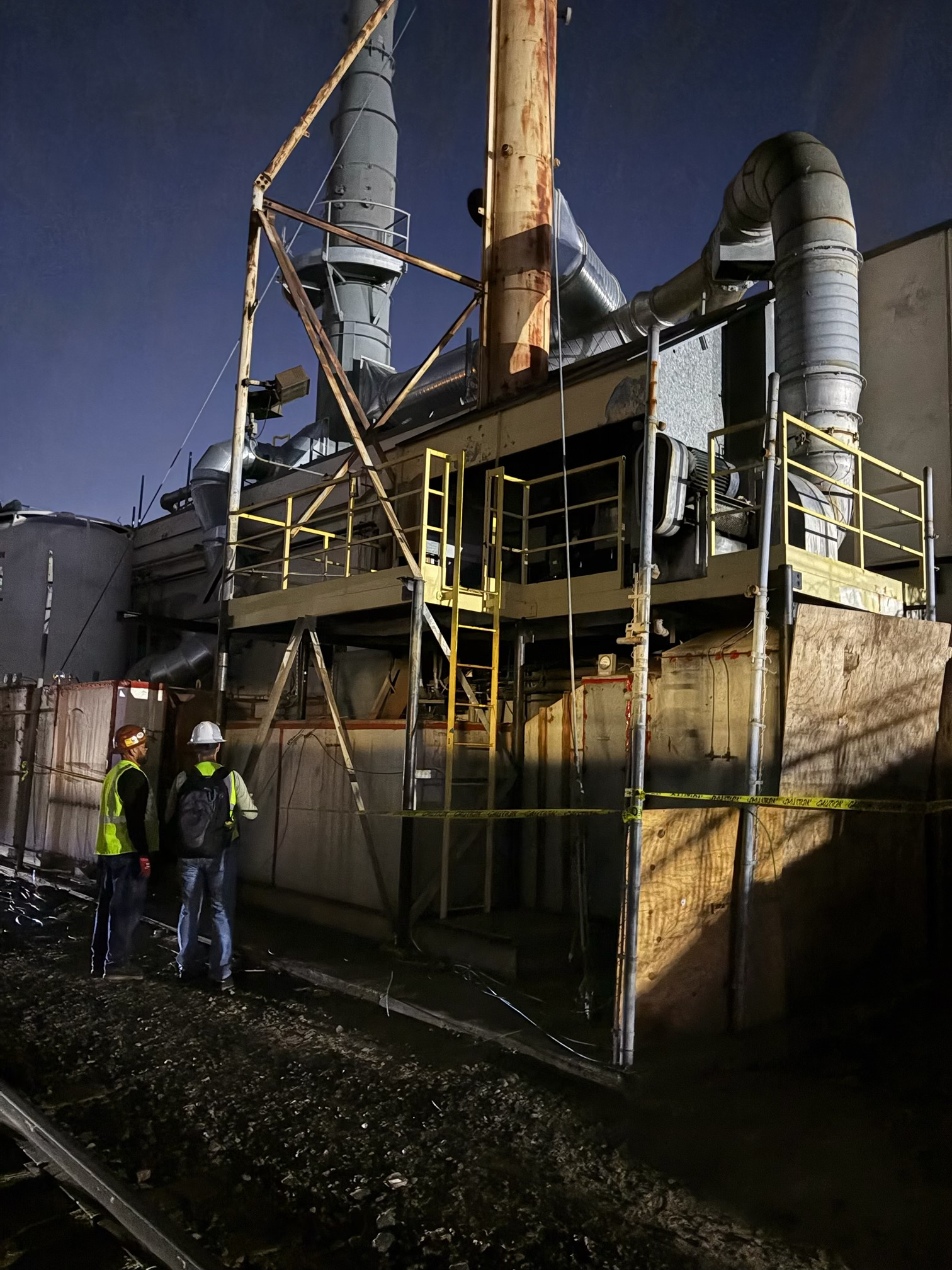
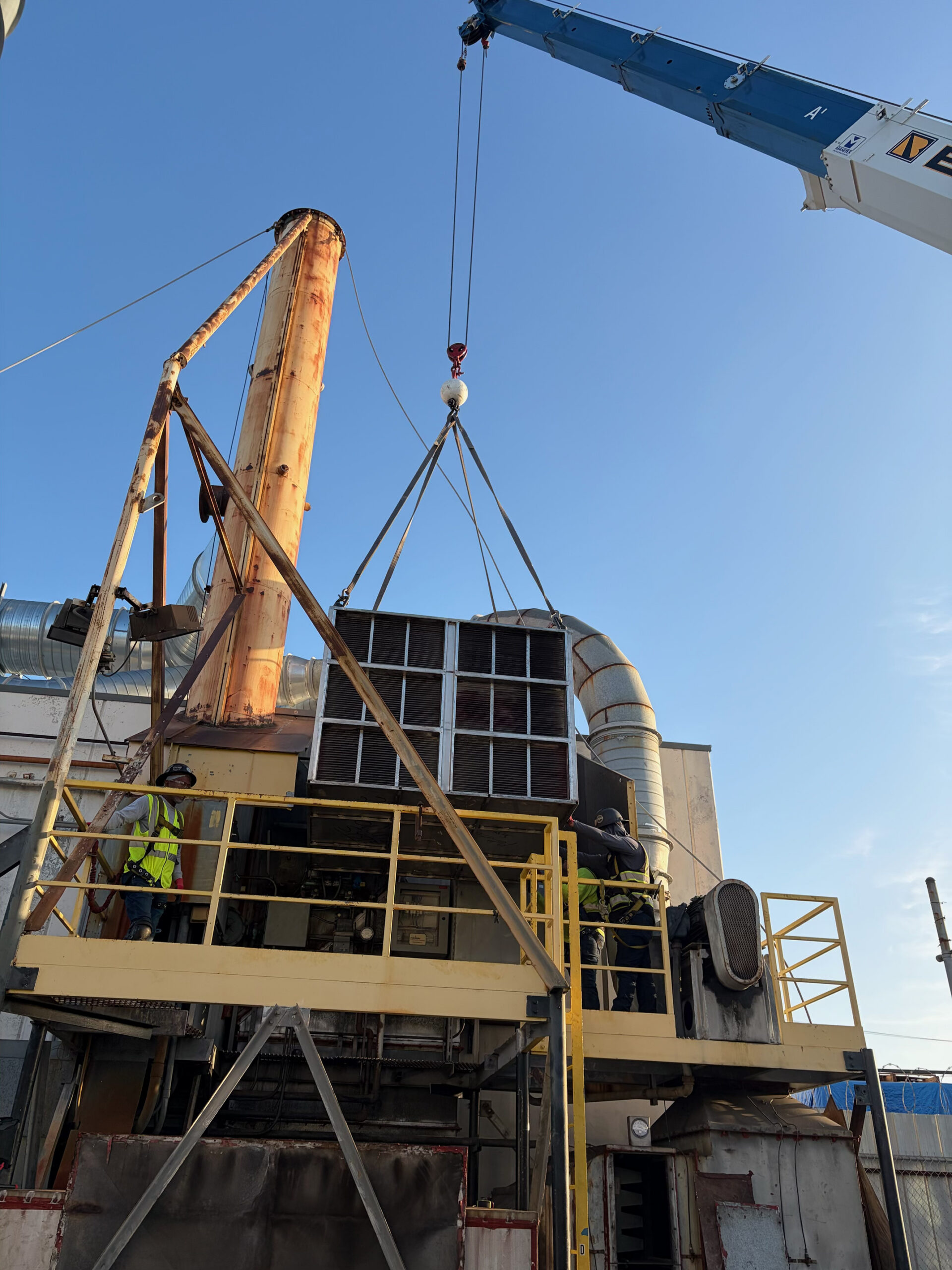
We worked closely with the plant to ensure clear communication throughout the removal and installation phases, as the units were located near the BNSF Railroad. Post-installation, we conducted smoke testing to ensure there was no process contamination. (This involved sealing off the unit ends and successfully forcing red smoke through the process side.)
By executing the complex mechanical and heavy rigging work in extended shifts, our team successfully completed the turnkey installation within the required timeframe, restoring both oxidizers to peak operational efficiency.
CUSTOMER BENEFITS
- Immediate Regulatory Compliance: Ensured the facility met the state’s stringent destruction requirements for Ethylene Oxide (EtO), mitigating the risk of fines and mandatory shutdowns.
- Enhanced Equipment Longevity: Upgraded the systems with robust, all-welded 304 Stainless Steel heat exchangers specifically designed for long-term reliability and leak prevention.
- Minimized Operational Disruption: Expedited project execution using extended daily shifts and specialized 13,000 lb. crane rigging to overcome severe site footprint constraints.
- Turnkey Execution: Safely handled all mechanical, structural, and heavy-rigging challenges, eliminating the need for the customer to manage multiple subcontractors.